Why I’m Starting a Conscious Ageing Circle for Women
Embracing Ageing
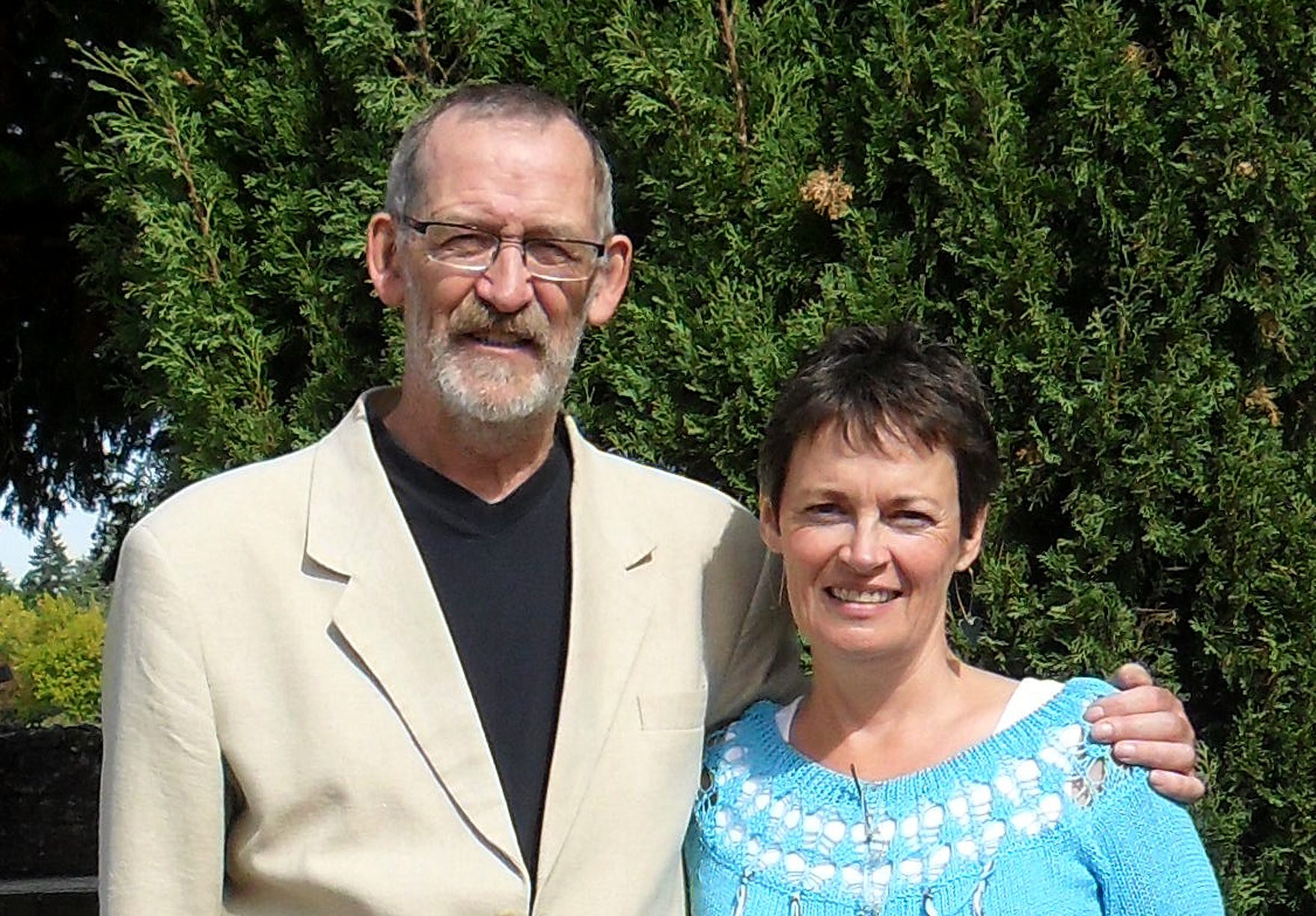
Jane and her first husband, Philip, one month before he was diagnosed
A strange thing happened in the year when my first husband had been diagnosed with stomach cancer, and before he died.
In being forced to welcome cancer into our marriage (well, not exactly welcome, but there it was), both of us were prepared to accept that it might have a message for him, and perhaps for me too. What this meant in practice was that we were also forced to become much more ‘here’. More present, and more in the moment.
All those wise sayings from the sages, that are so easy to go ‘yeah, yeah’ to, suddenly stopped being theoretical. The mind could no longer pretend it knew best, or that it had heard all this before.
It really happened for us. We were fully present to each other, much more often than not. What turned out to be the last year in our twenty-year marriage was, looking back, the best one. We had honest, soul-baring, vulnerable talks, even more so than when we first met, when we were excitedly spilling out our stories to each other.
So astonishing was this deepening that one day, over breakfast (before he was no longer physically able to eat), we admitted lovingly to each other that we could be grateful for the cancer. Even though it was likely to kill him, right then it had brought us together in such intimacy, such closeness, and such tenderness.
I have to say that the idea of being grateful for the cancer was a fleeting one. But it was a precious one too, because it prompted the reigniting of our love for each other.
This is the kind of stuff that conscious ageing is made of.
When Philip was diagnosed, he chose deliberately to turn towards healing modalities that could possibly help him, many of which he had turned his back on previously. Consequently, in the words of one of his therapists, he ‘healed at all sorts of different levels – it just didn’t translate to the physical level’.
This was important for me to hear, because I was witnessing that transformation, and it was wonderful. My openness to him, and his to me, was the thread that connected us in that last year, and brought us to the realisation that love really IS all there is.
In fact, the words ‘love is the answer’ were some of the last that Philip spoke. He was given the gift of naming a star on his 66th birthday, just days before he died. (Who knew there are stars that can be ‘bought’ and named?) But there it is: Love Is The Answer, behind the shoulder of Orion, and just behind Betelgeuse. For many months after he died, I looked towards that star and remembered him.
Although I didn’t think of this at the time as conscious ageing, it was. It was conscious because of the way we were both approaching this life-and-death situation. We made an active choice to acknowledge the cancer, not try to do battle with it, and instead examine our lives (and particularly his life) to discover what was wanting to be healed.
Photo by Curated Lifestyle
So what is conscious ageing?
Fundamentally, ageing consciously is making a choice to do just that. If you’ve been leading what you might call a conscious life, then you’re likely to want to engage with ageing in a similar manner. That means bringing awareness, acknowledgement and acceptance to the table where ageing is sitting alongside you. You are willing to have ageing be a member of your family.
This is regardless of the situation you are in, even though you might have preferences about it being a different way.
In our Western world, we are bombarded with products, services, attitudes and assumptions that frame ageing and getting older as something to be avoided for as long as possible. This is the antithesis of conscious ageing, because to be conscious about what is happening requires you to admit it is going on, rather than trying to push it away, cover it up, or resist it in any way.
It is definitely easier to acknowledge yourself as ageing if you have made a decision to be aware of your ageing self and body, and maybe even accepting of it. I remember vividly, some years ago when I was in my late fifties, the shock of looking in the mirror and seeing wrinkles on my cheeks. How had they appeared so suddenly? Surely, they hadn’t been there the day before?
It took a bit of getting used to. Then I saw the funny side of it. This thing called ‘ageing’ was happening to me too, and I’d better make friends with it. Why? Because it’s here anyway, whether I welcome it or not. For a more comfortable ride, I’d be better off making ageing feel welcome.
Ageing consciously also shows up in many everyday ways.
Querying your own internal ageism
A white-haired ‘little old lady’ was giving a PowerPoint presentation the other night at a meeting I was attending. She was reading from her phone as the slides came onto the screen. I noticed that I was surprised she was using a phone, and not paper or a notebook. I wouldn’t have thought this of a younger person; for them, I would have accepted it without question.
That’s my internal ageism speaking. So was my internal description of her as a ‘little old lady’. Not helpful. Not kind. And anyway, ridiculous. Using a phone for notes is not the prerequisite of younger people at all.
Standing up for yourself when you experience ageism from someone else
By that I mean assumptions such as someone not being able to do things because of what they look like; that they can’t understand tech; that because they live in a bungalow they don’t go upstairs; or that they won’t understand what younger people need now. Once you start noticing ageism, there are lots of examples.
Acknowledging and accepting that you are getting older, and what that means
This could be as simple as looking at the age spots on your body and appreciating them, rather than being critical. Or being kind to yourself when you feel tired, regardless of the time of day, rather than pushing through, trying to do better, or criticising yourself. It could be working towards the idea of simply saying ‘oh, there’s that pain again’, rather than feeling disappointed, wishing it would go away, or thinking you’ve done something wrong to have it in the first place.
Crafting an attitude of curiosity
If curiosity is one of your companions on the journey into this fourth stage of life, then you are in for a good time, no matter what circumstances come your way. Most people are less curious than they are judgemental, and that is such a loss. With a judgemental attitude, doors close, paths are shut, and everything contracts.
You can notice this in your own body simply by saying the words ‘judgement’ and ‘curiosity’ to yourself. They feel different, don’t they?
For instance, instead of deciding that someone is behaving like an elderly person because they don’t drive at night, curiosity invites a question: “Oh really? Why is that?” Discoveries can then take place. I know a friend who assumed she was finding it difficult to drive at night because her eyes were ageing. She didn’t know that with higher-sitting cars and LED lights, people of all ages are now finding it harder not to be dazzled by headlights.
Seeing retirement as an opportunity, not a loss
Something that often happens on retirement from a career or role is the discovery of just how much identity and purpose were tied up in it. This happened for me when I left the end-of-life planning company I had founded in 2016, and stepped away in 2023.
Suddenly, I had no role, no purpose, no point in getting up in the morning. Guilt about not contributing to the world threatened to take me over. Days with no appointments or structure were surprisingly hard.
I had promised myself that I wouldn’t start anything else until I truly felt motivated from the inside to do so. I knew myself well enough to realise that anything less would be avoidance: filling day after day with ‘something to do’. It took a somewhat uncomfortable ten months of ‘not doing’ before that motivation had enough space to arise.
Conscious ageing, for me, is about meeting all of this with honesty. The losses and the gains; the grief and the gratitude; the shrinking in some areas and the expansion in others. It asks us not to rush away from discomfort, but to listen instead to what it might be asking of us.
It is an invitation to live more fully, not less. To become more ourselves, not a smaller version of who we were. And to do it in company, not alone.
This is why I now bring people together in my Conscious Ageing Circle: a place to explore these questions, share the realities, challenge the assumptions, and discover what this stage of life might yet want to become. Conscious ageing is not something to ‘get right’. It is something to enter into.
And once you do, you may find – as I did – that even in the midst of uncertainty, something unexpectedly rich and alive is waiting for you.
Conscious Ageing Circle link: https://www.janeduncanrogers.com/circle
There is a free intro session tonight, Tues 27th at 5pm UK time - https://janeduncanrogers.com/masterclass-live-signup


Jane, thank you for sharing the very personal backstory that undergirds this initiative. I'm very focused, as you know, on the "living" side of aging, how it morphs, changes direction, grows (or doesn't) as the years pass. But in the end, the "living" part, it seems to me, is most important, and I applaud you for bringing a group together that, if I may, is/will be very consciously living as well as aging. I can't join you today, but I look forward to it in the future.
What a lovely read first thing in the morning, and what a wonderful outlook you have for your life. Thank you!