The Notebook which evoked buried memories of a mother and baby home in the 1960s
Being an unmarried mother sixty years ago was horrendous
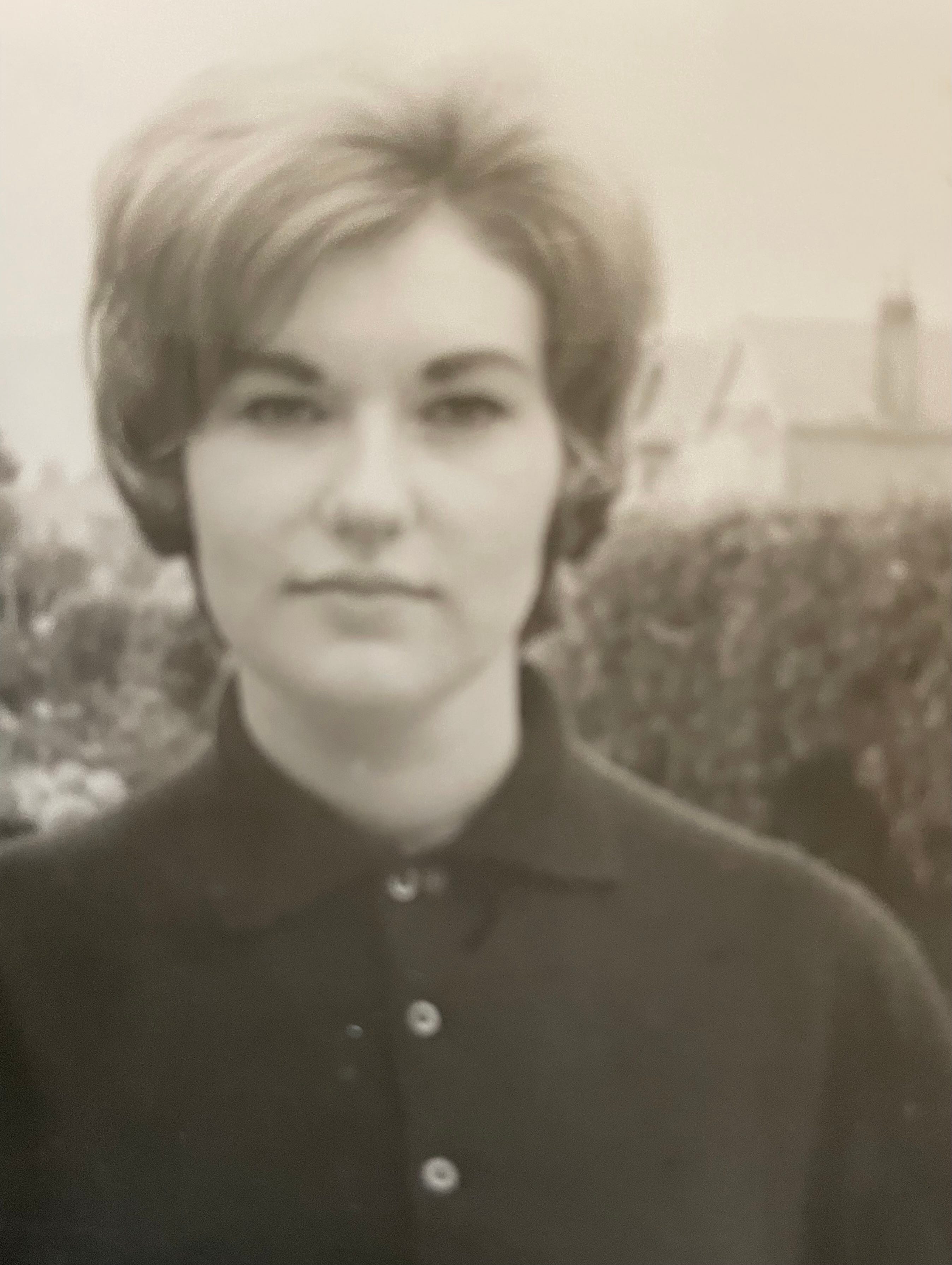
Carole at 19
IT WAS only as I was writing the final book in the trilogy about the Two Js that I truly appreciated the significance of a small notebook I discovered among a pile of ‘stuff’ in a cardboard box while I was decluttering. That notebook contained details of my short stay in a London mother and baby home in the 1960s when I was pregnant and unmarried.
Along with the notebook came a lifetime of buried memories, some so painful that I could only allow myself to consider a few at a time.
Those were the days when being single and pregnant carried an enormous social stigma. It was a shameful secret that had to be concealed at all costs from an unforgiving society.
The disgraced girl was hidden away until her child was born, when it was given to new parents, while the heartbroken birth mother was sent back to her previous life. Her fall from grace would never be mentioned by anyone. It was if nothing had happened.
When aged 19 and unmarried I discovered I was pregnant, my devastated parents threw me out of our family home in Sussex, desperate to protect themselves from gossip and social ruin. They upheld the unshakeable belief that preserving the family’s good name was more important than their daughter’s well being.
Abortion was illegal and definitely never an option for me, so I became an unmarried mother.
Once the overwhelming and paralysing mists of panic had cleared, I contacted a London charity called The Unmarried Mother and her Child, which arranged for me to work as a nanny with a family in Hampshire before going to a mother and baby home in South West London.
There were mother and baby homes throughout the UK. Pregnant girls with nowhere else to go, moved into these homes six weeks before their babies were born. After the birth, they had to look after their infants for another six weeks before they could be adopted. Looking after your child for six weeks before having it snatched away from you was certainly the harshest punishment of all.
Although I had decided very early in my pregnancy that I wanted to keep my baby, it quickly became obvious that I would be totally unable to do so. My parents had made it perfectly clear that the child and I would not be welcome and without family support I couldn’t earn enough money to care for both of us. I was distraught when I eventually accepted that there was nothing I could do. My child had to be adopted.
Even now, I find it difficult to describe how horrendous that mother and baby home was. Those of us who ended up there were treated with spiteful malice, simply because we’d had sex before marriage – and had been caught out by becoming pregnant.
A supportive friend told me: “You can sleep with a guy for ages without anyone finding out but as soon as you fall pregnant, the whole world knows what you’ve been up to. Women can’t run away from their mistakes as men can – it’s there for nine months for all to see!”
I was so distressed by life in the mother and baby home that I only stayed a few days instead of the three months originally intended. I was fortunate; the family I had been working for allowed me to return, providing the love and care my parents had refused to give me.
Most girls who got themselves ‘into trouble’ as it was euphemistically termed, had no choice but to stay in that dreadful place, looking after their babies until they were taken away to be legally adopted. Although I escaped the mother and baby home, there was no escaping adoption. Separation for life. An unimaginable cruelty imposed by society and religion.
When I fled the home, I was so traumatised that I was determined the experience should never be forgotten. Thus I wrote down the basic facts for posterity. Then life took over and I forgot all about those scribbled notes buried in a box.
The notebook survived several house moves across the UK and when it eventually surfaced, unmarried motherhood was no longer a sin of epic proportions and few people remembered what it had been like.
So I wrote Perfectly Imperfect: The Story of the Two Js as a tribute to the thousands of girls over the years who had been forced to have their precious babies adopted.
This book is a novel – fiction based on fact – and includes my own story intertwined with those of several other women: unmarried mothers forced to have their babies adopted; girls who had undergone risky illegal abortions, and those who were themselves adopted children.
Perfectly Imperfect tells the story of young and unsophisticated Juliet, whose two-week holiday on the Italian island of Capri turned into a four-month stay when she was swept off her feet by Enzo, a gorgeously handsome Italian singer and guitarist.
Juliet’s parents reluctantly accepted her constant excuse of extending her holiday to learn the language. But when she eventually telephoned to say she was going to marry Enzo and go with him to America where he had a tour of concerts lined up, they forcefully demanded she returned to England. So Juliet went home, leaving Enzo in Italy – and she didn’t go back.
Having gone home merely to pacify her parents, Juliet had every intention of returning to Italy to marry Enzo. But once in England without him she got cold feet, seriously worried that he would eventually tire of her and go off with one of the glamorous women who were always prowling around. If that happened Juliet knew she would die of a broken heart. Could a man who loves women ever be faithful to one woman? Enzo was a gorgeously charismatic man who could have any woman he wanted. Why did he want her?
With an understanding beyond her years, Juliet knew that the grief she felt at leaving him would be nothing compared to the certain agony if she returned and Enzo left her for someone else. Not going back to Italy was self-preservation.
Shortly after returning home Juliet had an unexpected and definitely unwanted liaison with a former boyfriend and few weeks later she discovered she was pregnant.
Although believing in her heart that the baby was Enzo’s child, there was no DNA testing in the sixties and therefore no way of proving paternity. The previous boyfriend offered marriage – before changing his mind shortly afterwards, deciding that the baby was not his.
This book follows Juliet’s traumatic journey from being an unmarried mum, to giving her baby for adoption and then the struggle to pick up the threads of a normal life once again.
Almost three decades later Juliet is reunited with her daughter. The child she had named Vittoria – the Italian version of the classic English Victoria – had been renamed Clarissa by her adoptive parents. Clarissa tracked down Juliet when a change in the law allowed adopted children to trace their birth mothers. Happily the two women gelled immediately and became good friends.
“I can never be Clarissa’s mother because she has one already and we can only ever have one mum,” said Juliet, adding: “But Clarissa will always be my daughter.”
While writing Perfectly Imperfect I decided it was going to the first of a trilogy featuring three generations of women from the same family. Books two and three followed automatically, almost writing themselves.
With Perfectly Imperfect being Juliet’s story, book two Living Life Backwards: The Continuing Story of the Two Js features daughter Clarissa setting out to find her Italian birth father.
Book three The Girl with Long Red Hair: The Two Js Plus One stars Amy – Clarissa’s daughter and Juliet’s granddaughter – who went to Naples to find a gorgeous Italian man of her own. Did history repeat itself?
And who are the Two Js? Well, they are Juliet and June, who met at school aged five and remained lifelong best friends. The story of their remarkable friendship is featured in book one but also spills over into the rest of the trilogy.
In the 21st century few remember – or understand – the trauma suffered by decades of women whose only ‘sin’ was becoming pregnant while unmarried. Many of these women were scarred for life after being forced to give up their newborn babies for adoption.
It was while I was writing book three that I realised the importance of that notebook I unearthed while I was decluttering. The stories that emerged from those scribbled notes are women’s history within living memory. They must never be forgotten.
*I write under the name C J Taylor and the books can be found on Amazon and Kindle and also Waterstones online. Book three is due to be published in June 2026.


Oh my goodness Carole, what extraordinary stories. I’ll def go find them! How amazing to find the precious notebook. Thanks for sharing the story of what should now be called a terrible abuse. Love the photo too. I have one just like it of me from that era!
beautiful post, and I’m touched by the way you use the lightly held weight of your words to do justice to your stories - I will go and see if they are available on kindle or audio, as my hands struggle with holding physical books these days - but I want to read you because I can feel you in your writing already 🙏