


In me she has drowned a young girl, and in me an old woman
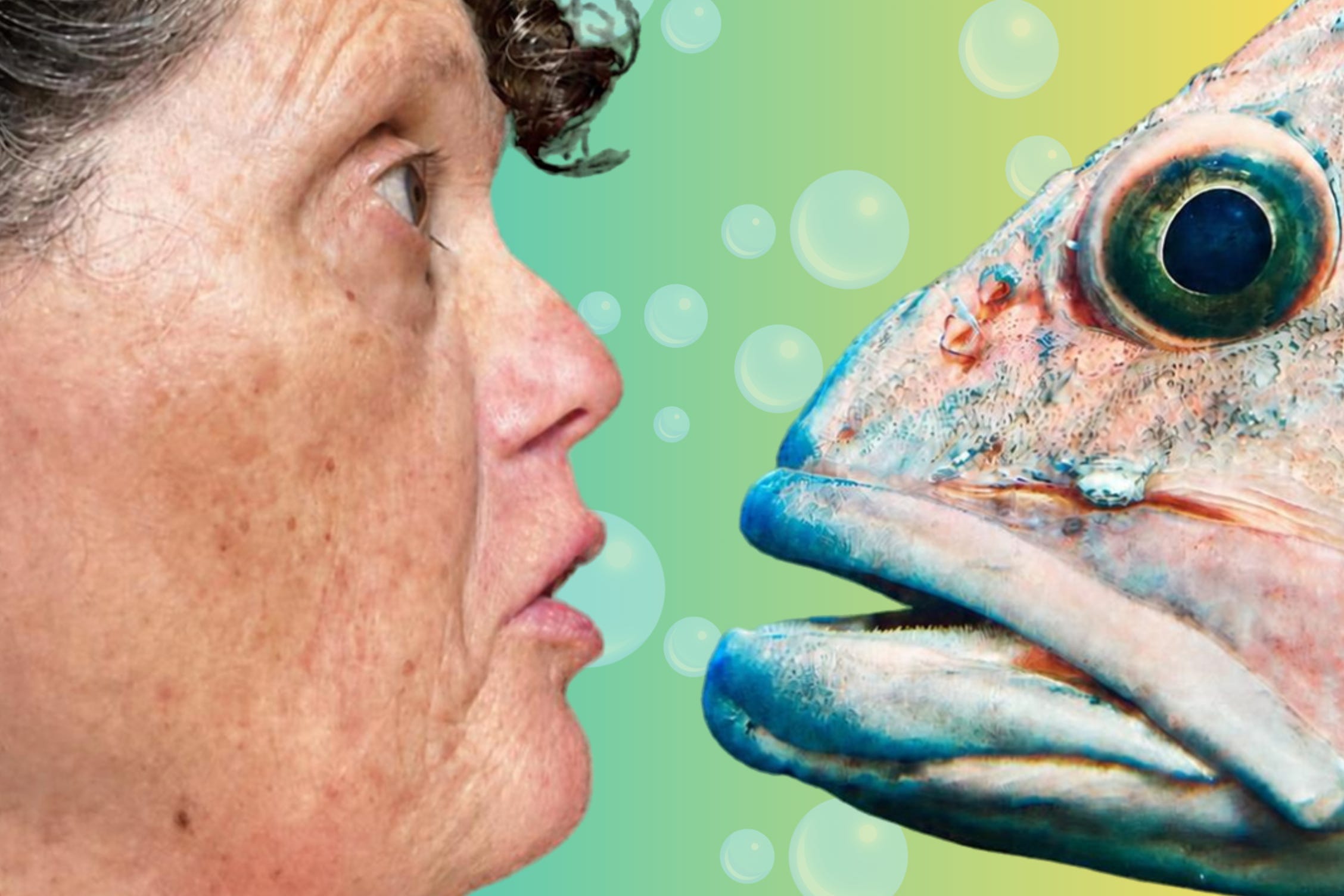
Rises toward her day after day, like a terrible fish.
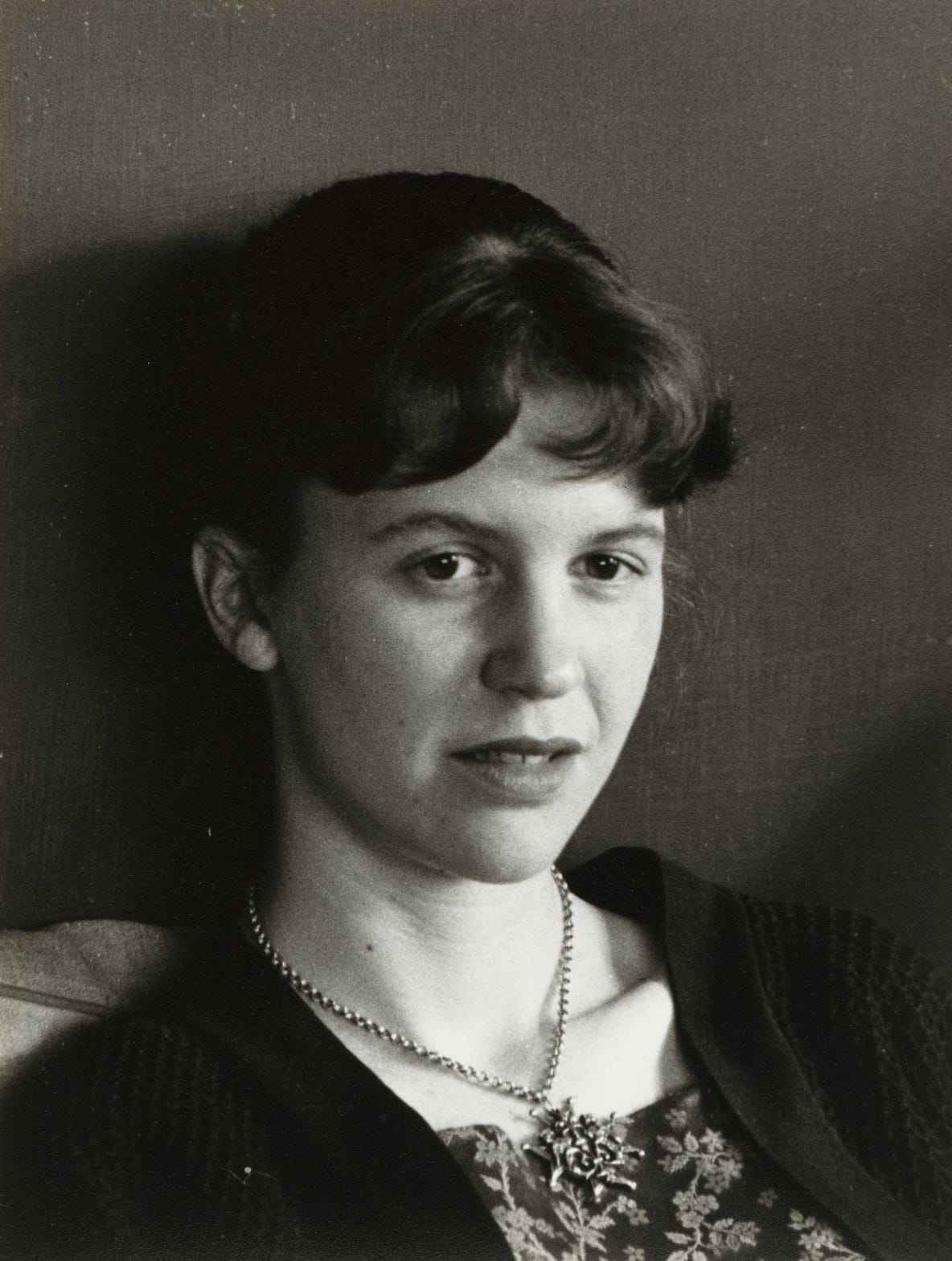
Sylvia Plath, from the poem Mirror, 1961
Sylvia Plath wrote this poem at 28, only a few years before her death. The impartial reflection in her mirror turns into gendered ageism by the final lines. As I type this, I am not looking in my mirror, but peering into the cracked screen of my phone, and like Sylvia Plath’s mirror, my old woman face rises up like a terrible fish.
I look at my face in my phone multiple times each day. I make messy face-to-camera reels for IG, I floof my hair before a zoom meeting, a selfie perhaps on a good hair day. At 60, having been too busy with life in the intervening decades, I now look at my face nearly as often as I did when I was a teen: then anxiously checking bold make-up looks and poking at imagined flaws. Now, finally, after six decades, I like my face, my terrible fish face.
Propped against my laptop the phone is badly angled; a quarter of available space centres my neck and chins. I note the skin of my neck is creased more on the left than the right, my pulse visibly agitated. Does the mere act of looking raise my inner beat? I peer closer. Am I, like Nora Ephron, worried about my neck? This terrible fish neck? The creases reflect the habit of tilting my head to the left as I listen, and I have listened a lot in my life, both professionally and personally. I am a good listener, my ears softly opened to receive. No. I am not worried about my neck.
The chins then? What about those. I would never, ever take a picture like this, not even take a family call, so it’s a startling new angle for me, and I’d love to have a sharp-angled jaw. I see instead my dad’s elongated chin, the same chin my son inherited, nestling into the soft folds of my mum’s ‘under chin’. I recall their set jaws, biting down all kinds of inconvenient feelings they had no way of expressing. My parents, both long dead, now settle together into my face, and it feels a sweet reflection of my inheritance. I am grateful that I can let my rage fly, my joy swoop, my howls roll, I have evolved beyond my inheritance. My terrible fish chins show me this.
Moving up my face requires some manoeuvring: my specs have to come off and my laptop has to come closer to bring my nose into focus. Bifocals, ironically, only help at a specific distance, and are otherwise useless, especially for looking at your face. It’s high summer as I write and my nose is not hard to discern as it is pink, very pink. Some trick of its angle catches the sun, though I dutifully apply sunscreen each day, the privilege of working in the garden, bothered only by bees. It reminds me of my daughter’s squishy, high-cartilaged version, and how she would entertain us by squishing it, pig-like, into the glass screens of the tube trains. Horrific to think of it, post-pandemic. The years of germ-ridden mucking about with my kids, now long passed.
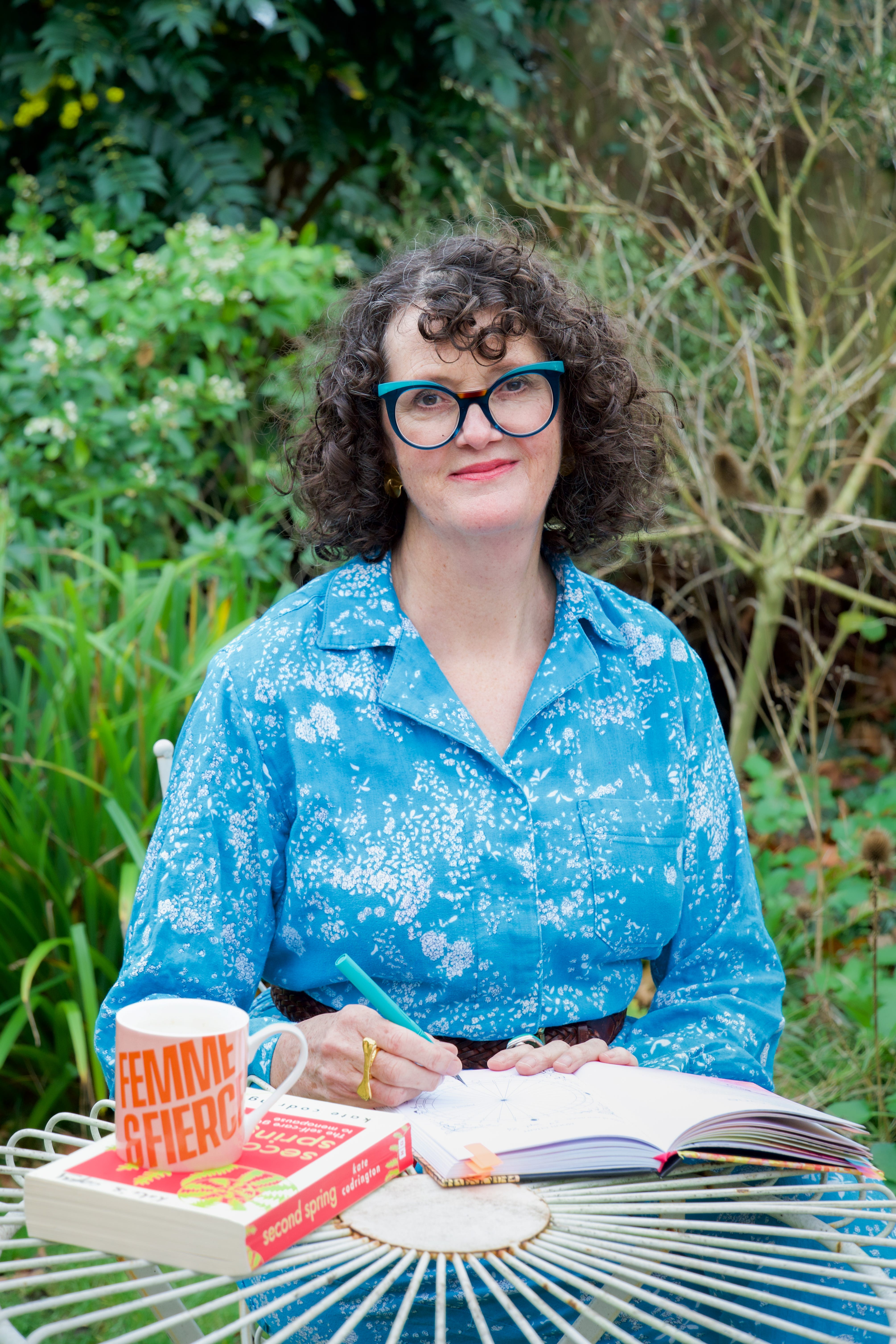
At the bridge of my nose, there is a deeply engraved triangle of lines, reminiscent of a Star Trek Bajoran. It reflects what my face does when I am puzzled, worried, figuring stuff out. I must pull this face a lot for these to be so deep. I hear from my younger friends that ‘11s’ are a popular site for Botox, so at 30 or so, they look ‘fresh’. Even at younger ages, so-called ‘prejuvenation’ is a thing. For myself, I prefer my terrible fish face. My 20-year-old face, by comparison, looks under-baked from this distance, like a loaf taken out of the oven too early. These deep creases show my curiosity, from which I have developed a skill at decoding situations and dynamics, looking under the surface more deeply in search of understanding of the world around me. This is what these Bajoran marks tell me: I’m curious, engaged, I actually give a fuck.
My eyes are decidedly wonky. Sunken protectively into their sockets. Left eye more dropped, less lid visible than right, though righty has a sharp downward-angled lid, lifted at the centre from my eyebrow. My eyebrow must be lifted often enough in enquiry, or to signal irony, to have changed the shape of that eye. Soon my lids will be heavy enough to be propped up by my lashes. Will I mind that, I wonder? Seen together my eyes betray sadness, a life of living on edges, not belonging, longing to join in, overwhelmed when I do. I used to try and hide this vulnerability with cool, with the death stare. Today my pupils look back at me through my phone, dark and round and strong. They tell me the truth that my edge-living has gifted me compassion, vision, and a fluidity of identity. Ultimately freedom. No lashes now, or eyebrows to speak of, the postmenopausal cliché of hairs wandering off to inconvenient places is true, and how I miss the luxuriant lashes and brows of my youth.
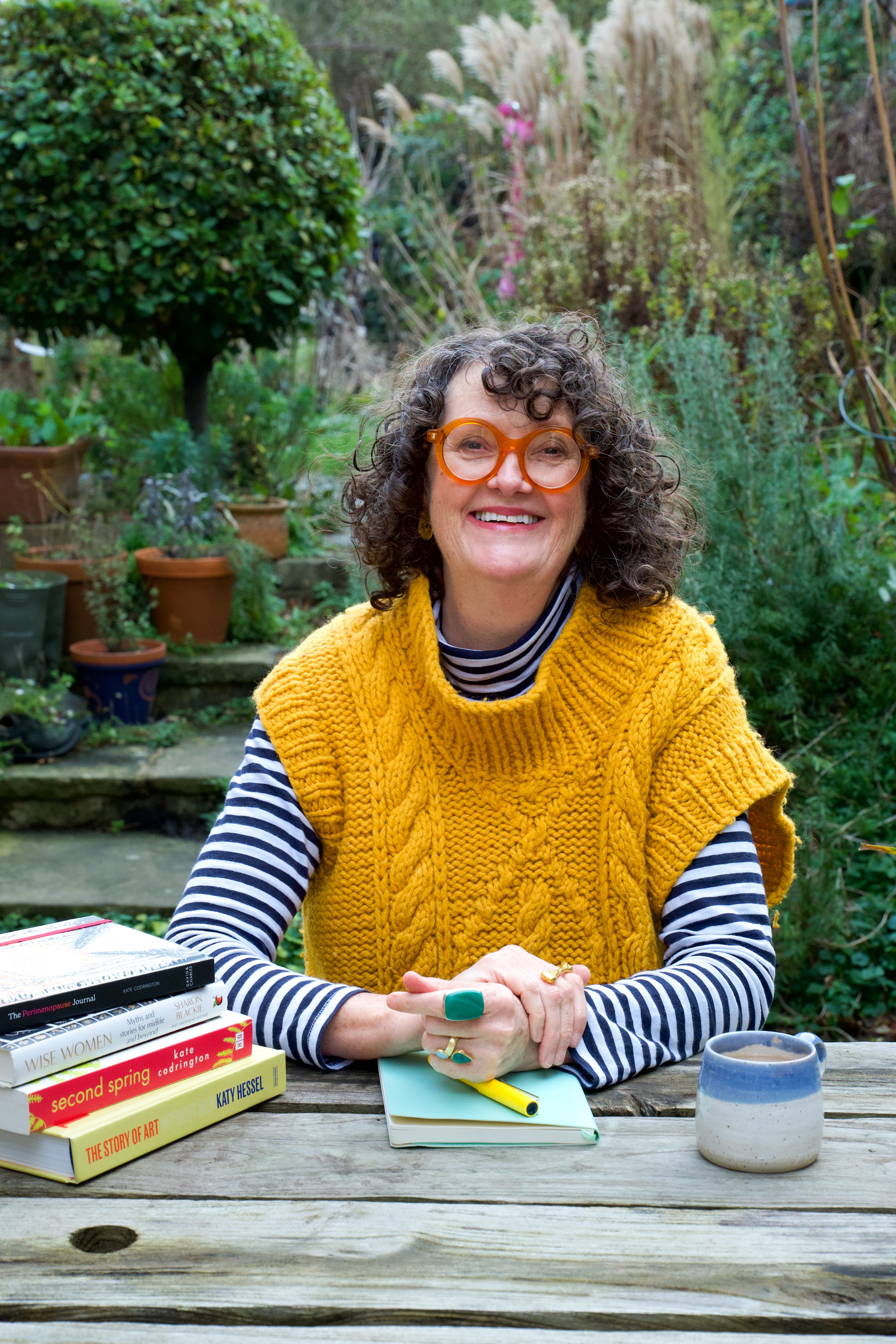
Biological fertility, freshness, juiciness have all gone. Also gone is the masking, uncertainty, most of the shame and compliance. What I witness today is much better; distilled into the fishy asymmetricality and creases are the kindness, clarity and compassion accrued from a life lived surviving, creating, recovering, mothering, failing, thriving. From my privileged clarity of lower oestrogen, I see straight through patriarchal fuckery; I am indeed a terrible fish, a Leviathan, that mythical creature and essence of divine creative power. Swimming sinuously in the waters of the unknown as mortality winks at me, full of purpose, creative potential, wild and free. I am, finally, a terrible fish and thank fuck for that.
Bio
Kate is a mentor, author, speaker, facilitator, artist and podcaster. The author of Second Spring: the self-care guide to menopause, one of the seven best books on menopause according to the New York Times. The Perimenopause Journal is available now. Kate mentors professionals and sensitive people in perimenopause and beyond, 1-2-1 and in groups, is a nature-based Yoga Nidra meditation guide, hosts Life - An Inside Job podcast, has been a therapist for over 30 years and creates multi-level art textile projects. She is fascinated by the bittersweet process of ageing and is currently writing about the journey of postmenopause to end of life. When she’s not doing these things, you’ll find her spotting swifts or playing in her compost heaps.

I loved this - your face story, Kate. Annette Lawson
I love this! Your face is constantly interesting and shows which way the wind is blowing in your internal weather system ❤️😊