AofA's Hot To Trot Talking Points
Every Friday
We’ve had a lively week in the FB group - Advantages of Age - BabyBoomers and Beyond - and one of the most discussed posts was about which words - kind of faddy words - are driving us nuts.
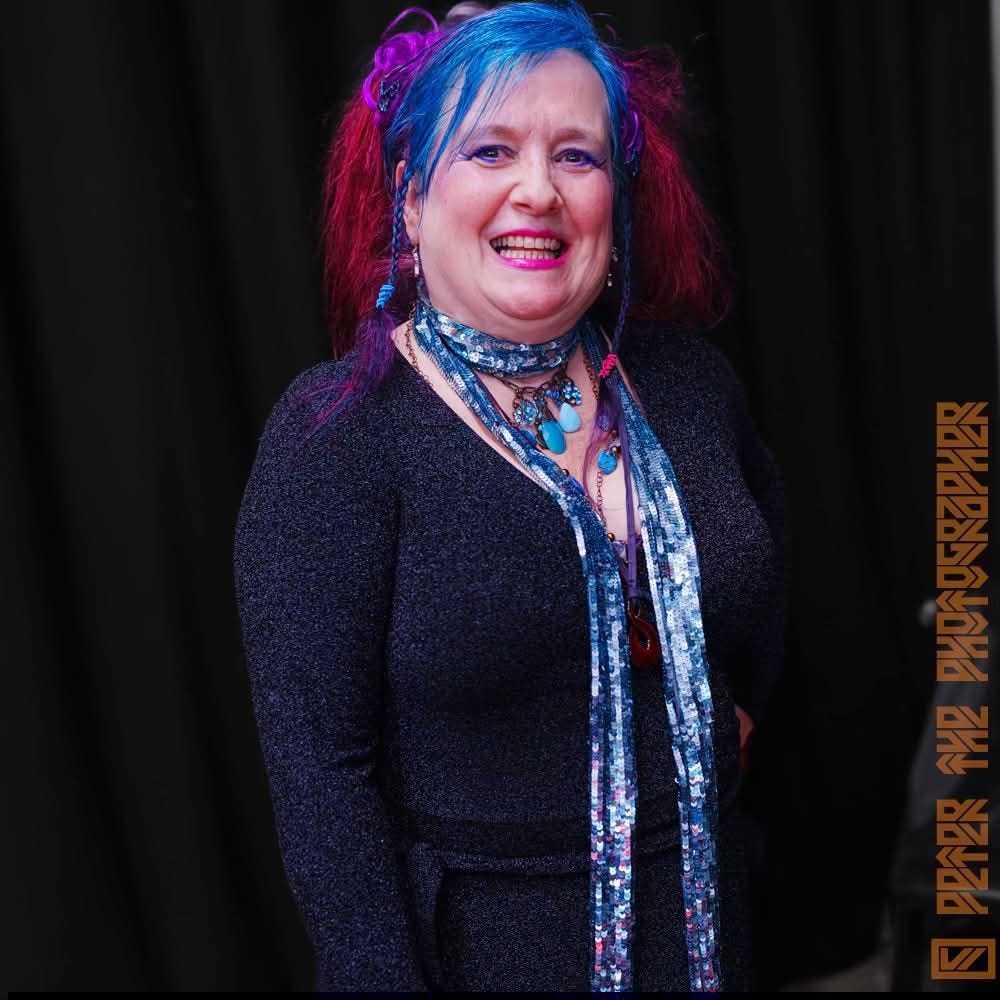
1 Including this splendid photograph of Chloe Bates - who has promised to write some more pieces for us in 2026, she was nominated for AofA Substack writer for her article on Playing Punk At 63 - by Peter Watkins from our Awards 2025 because it’s Xmas and Chloe looks so happy and gorgeous. Love that blue. She’s the fairy on our Xmas tree.
On a more serious note, we debated about what 60 year old Dr Howard Luks said on FB about ageing and keeping on going, that you can’t give in to ‘ageing’, you have to keep at it on the movement front. This is what he said.
‘I’ve spent my career trying to help people recover what they’ve lost—mobility, strength, confidence in their bodies. But at 60, I’m far more interested in preserving what I have. That’s not a fear-based approach. It’s a strategic one. I know the slope gets steeper with age. But I also know how much control we still have over the trajectory.
No… This isn’t a set of slow fade strategies. It’s a conscious set of strategies meant to build slowly… and meticulously maintain what I’ve gained.
We are still capable of building muscle mass, increasing strength, improving coordination, agility, and enhancing balance. And yes, this includes menopausal women, who are sadly bombarded online by so much nonsense on social media saying that they’re damaged and done.
No… this post is about the strategies I employ to improve my consistency. It does mean dialing down the intensity occasionally. It means that I manage my load far better… I am much less likely to be too sore after a day in the gym to be able to run. I leave the rock-climbing gym after 1 hour instead of 2. Small changes.
So here’s what I’m doubling down on right now. These aren’t trends. These are non-negotiables—the things that protect my capacity and push back against decline.
1. Low-Intensity, High-Volume Movement
Not every session requires intense effort. But nearly every day includes deliberate, low-intensity movement—such as walking, biking, or hiking. It’s the foundation for mitochondrial health, glucose control, and recovery. It’s not just about burning calories. It’s about staying metabolically flexible and biologically “young.” Remember, nearly every longevity study shows dramatic benefit from walking 7,000 steps a day. For some of us, that’s our baseline, and for many, their ceiling-- and that’s okay.
2. Training for Real-Life Skills: Strength, Power, Balance, and Agility
You didn’t fall because you tripped; you fell because you couldn’t recover. The nuance is important to recognize. At this stage, training isn’t just about building muscle—it’s about preserving the skills that keep you upright, capable, and independent:
Strength to lift.
Power to react.
Balance to recover.
Agility to adapt.
These aren’t “nice-to-haves”—they’re lifesaving. A fall, a misstep, a moment of hesitation… this is where decline often starts. So I train for those moments now, not after they’ve already happened.
3. Sleep Discipline
There’s no buffer for inadequate sleep anymore. It affects recovery, adaptation, cognition, mood, and inflammation. So, I’ve become more serious about it: (usually) the same bedtime, no late meals (3 hours between the last meal and hitting the pillow), and consistent light exposure in the morning (which sets your circadian rhythm). Sleep is the silent partner if I want everything else to work well.
4. Proper Nutrition
Plenty of protein. Lots of fruit/veggies. No fear of carbs. I seek 30+ grams of fiber/day. I’m not chasing purity, and I stay out of dietary rabbit holes—I’m chasing consistency. My nutrition supports muscle, movement, and metabolic health. That means eating well most of the time… and still enjoying the occasional pint of ice cream without guilt.
5. Saying No to Stupid Risks- usually
Injuries take longer to heal. Momentum is harder to regain, so I try to train to avoid a setback. And recovery from setbacks or injuries is never linear. As a result, I’ve become more cautious about taking risks. I still train hard on occasion. I still rock climb. However, I only climb V1s to V3s and stop at 10a on the wall. I still push and pull heavy weights in the gym, but only weights that I can move 8-10x. I skip the ego lifts, the overloaded joints, the chaotic weekends that wreck recovery.
I’m not optimizing for youth—I’m investing in durability. I want to keep moving, thinking, lifting, contributing—and I know what that requires.
At 60, the margin for error shrinks. The price for ignoring the above increases dramatically. But what is the payoff for consistency? It’s huge.’
3. This was such fun. I put it into the group and AofA members responded fulsomely. At the time of writing - unprecedented as in Keir Starmer over-using it and robust are in the lead. There was an outpouring from legend to genius to passed (for dying) to curate. And many more. What is your personal word bugbear at the moment?
4. We loved this photo of Edna 0’ Brien taken by Steve Pyke.
“We all leave one another. We die, we change - it’s mostly change - we outgrow our best friends; but even if I do leave you, I will have passed on to you something of myself; you will be a different person because of knowing me; it’s inescapable.”--Edna O’Brien/”The Lonely Girl”
5. Jamie Lee Curtis on the deaths of Rob and Michele Reiner. So terrible. ‘I will always remember them as they lived. Passionate. Political. Surrounded by family and friends. Rob and Michele were a united team. We all went to Stonehenge to shoot the final Spinal Tap concert. Rob directed. Michele produced. I took this image of their beautiful partnership and love and stunning appreciation that this creative, familial life had led them there. This is an ungraspable tragedy and loss. Pray for strength for their children. The world is bereft without them.’
6. Jan Day, Tantra teacher and relationship expert was interviewed about her life and the history of her work and how it has evolved. For the podcast Sacred Union. You can listen here -


