AofA's Hot To Trot Talking Points
Every Friday
This we delve into Death Doulas - just as Nicole Kidman revealed she’s training to be one - and watched Miriam Margoyles on BBC 2 to much mirth and admiration..
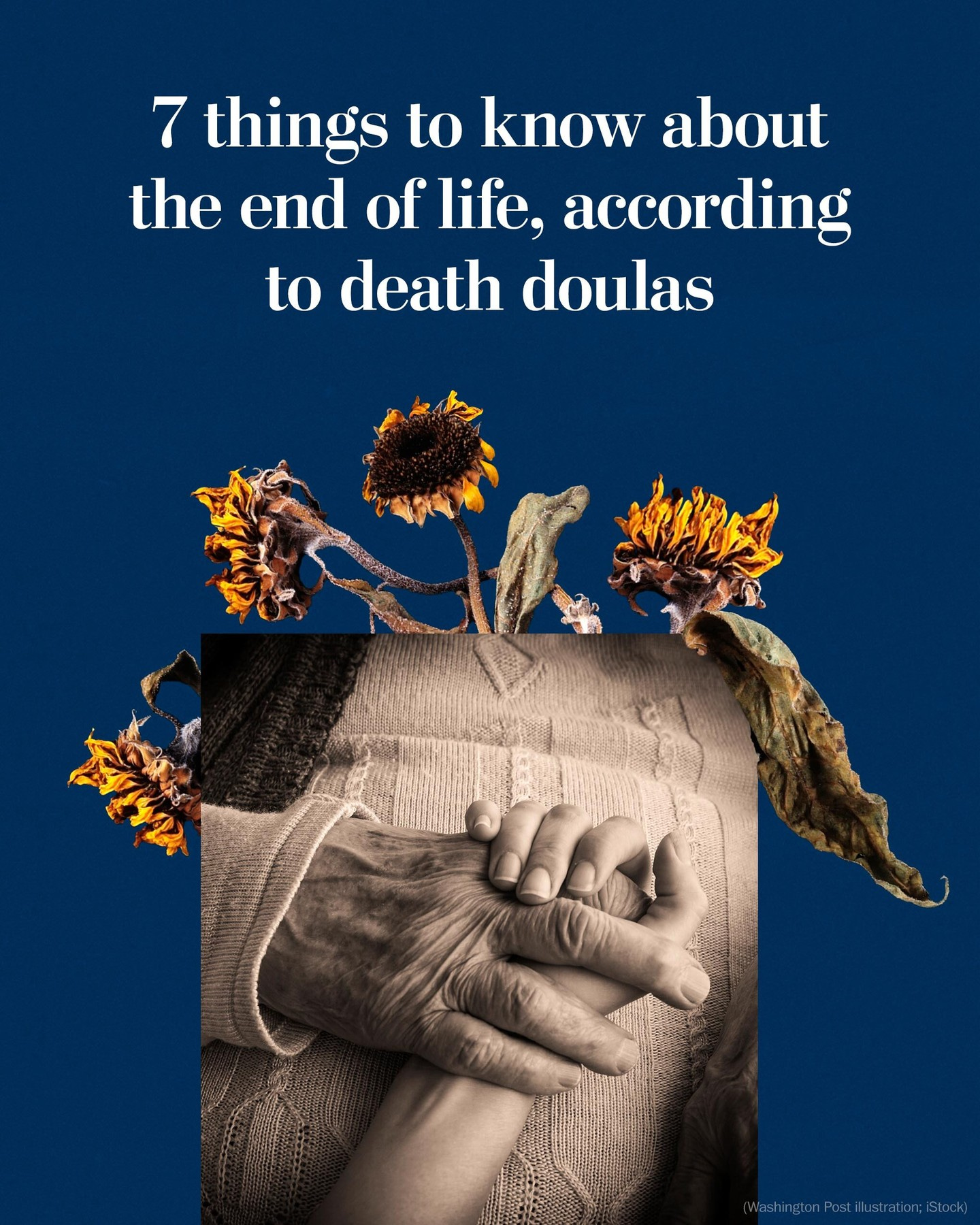
This was a piece in the Washington Post - ‘In a recent episode of the popular HBO Max medical drama “The Pitt,” an emergency department nurse moonlights as a death doula for a woman with terminal cancer. While birth doulas have become a familiar part of modern health care, the idea of a death doula — someone who supports people through the dying process — may be less familiar.
“A death doula is a calm, compassionate presence who can be there for dying people and their loved ones in their final moments,” said Kristen Patterson, a death doula and end-of-life planner in Virginia.
From advocating for patients with medical providers to offering emotional comfort through reading or playing music, death doulas can support both the dying person and their caregivers. They share insights into what they’ve learned about the end of life.’ And so I asked if our members would like a death doula to accompany them to death. I would. But not everyone was in favour.
This was a piece in the Huff Post where the writer said that she really wanted people/friends/family to ring her when her husband died. But not many did. They sent messages. And for the writer, that was not enough. So I asked what people would like? And quite a lot of them only wanted a few precious people in their lives to phone… they were happy with messages. I think it was obvious that we’re all individuals who need different things at different times so I think it’s best to say what we’d like.
Fascinating article in the Guardian about the needlework/artwork by Elizabeth Allen who had a flurry of interest in her pieces - after artist, Patrick Heron visited and spread the word - and then it all disappeared again. She died in 1967 and now there is an exhibition in Worcestershire’s Folk Museum of her work. They are vibrant, unusual pieces.
We were sad to hear that singer with Clannad, Moya Brennan had died at 73. She lived with her husband, Tim Jarvis who is a photographer, and children, in Donegal. I knew Tim when I worked for music paper, Sounds, he was often the photographer for the evening.
‘Good Grief Hastings will explore how creativity, conversation and community can help people support one another through grief and loss. Taking place over the late May Bank Holiday weekend, the four-day festival will bring people together for talks, workshops, music, film and creative experiences that open up compassionate conversations about death and bereavement.
The festival is produced by local events organisation 18 Hours, in partnership with St Michael’s Hospice, Good Grief Festival CIC and the University of Brighton, as part of the £2.4 million Coastal Community and Creative Health project, a national research initiative exploring how creative community activity can improve wellbeing and help tackle health inequalities in coastal towns, including Hastings.
Good Grief Hastings creates a welcoming space for people to share stories, engage with specialists in grief support and the creative arts, and take part in thoughtful and inspiring workshops. Through music, visual art, film, performance and discussion, the festival challenges the taboos around death and loss, encouraging open and tender conversations.
Across the weekend, audiences can expect Remembrance walks, storytelling events, talks, film screenings, live music, performance and arts exhibitions. There will also be opportunities to explore grief through shaping clay, weaving, writing, dancing and creating together in shared spaces. Some moments will be quiet and reflective, others communal and energising.
Where it began
Good Grief Festival was founded in 2020 by Professor Lucy Selman at the University of Bristol. Originally created as an online event during the pandemic, it responded to a time when many people were grieving in isolation.
Since then, it has grown into a nationally recognised festival, bringing researchers, healthcare professionals, artists and communities together to talk openly and creatively about grief. Recent in person editions, including Good Grief Weston, have transformed community spaces into places for reflection, conversation and support, attracting thousands of participants across the UK.
Now, this nationally recognised festival comes to Hastings, shaped by local partners and rooted in the town’s strong cultural and community networks.
Quotes
Dr Mandy Curtis, Director of 18 Hours and Senior Lecturer at University of Brighton’s School of Business and Law, said:
“Good Grief Hastings is about creating space for grief in all its ways. Grief is not only about the loss of a person. It can be about changes in our lives, our health, our relationships or our sense of identity. By bringing this festival to Hastings, we hope to offer a welcoming and creative environment where people can explore those experiences openly, through conversation, making and shared moments.”
Amalabandhu Chandler, Bereavement and Spiritual Support Services Lead at St Michael’s Hospice, said:
“While everyone experiences grief at some point in their lives, many people face isolation and loneliness when coping with the loss of someone close to them. These feelings can have a profound impact on mental health and wellbeing.
Through arts and creative expression, Good Grief Hastings will create welcoming spaces where people can come together to reflect, connect and talk openly about grief in accessible and supportive ways. The festival will bring people together through conversation, creativity and shared reflection, helping to normalise discussions around loss while strengthening both individual and community resilience.
By sharing experiences and engaging in creative activities, participants can feel less alone in their grief and more supported by those around them. Over time, this approach helps foster greater compassion, stronger social connections and a more open culture around grief, supporting healthier, more resilient communities for the future.”
Professor Nigel Sherriff, Director of the Centre for Transforming Sexuality and Gender and Professor of Public Health and Health Promotion at the University of Brighton, said:
“Coastal communities often face significant health inequalities, but they also have rich creative and cultural networks that can play an important role in supporting wellbeing. This festival shows how creativity can help open up conversations about difficult experiences such as grief and loss, while bringing people together in supportive and meaningful ways. As the South East lead for the Coastal Community and Creative Health project, the University of Brighton is proud to support initiatives like this that demonstrate the real potential of community creativity to improve health and wellbeing.”
If you have any queries about this festival, please contact us at office@18hours.org.uk
If you have any queries about bereavement, please contact St. Michael’s Hospice at Bereavement@stmichaelshospice.com’
We’d like to see this idea explored more by the government. There are apparently over 1 million empty homes in the UK and the Big Issue suggests that they are renovated so that the homeless can move it. We agree.


